Health & Safety

A practical Health and Safety guide for employees, contractors, and visitors across S&H Trading Investment (SL) Limited offices, worksites, vehicles, and project environments.

Office Safety Construction Safety Emergency Procedures

Our Safety Commitment

Introduction

This handbook provides workers at S&H Trading Investment (SL) Limited with essential Health and Safety guidelines, standards, and rules to help ensure a safe working environment. It covers office and construction safety, from personal protective equipment to emergency procedures.
Statement of Intent

S&H Trading Investment (SL) Limited believes that every worker has the right to work where risks to Health and Safety are properly managed and controlled. We are committed to protecting employees, contractors, and visitors, and we will take the necessary steps to safeguard everyone on our premises and worksites.

Employee Responsibility

All employees must observe the Health and Safety rules set by management, attend required safety training, and take reasonable care of their own Health and Safety and that of colleagues. Failure to comply with safety rules may lead to disciplinary action.

Rules Covering Gross Misconduct

An employee may be liable to summary dismissal if found to have acted in any of the following ways:

  • A serious or willful breach of the Safety Rules.
  • Unauthorised removal or interference with any guard or protective device.
  • Unauthorised operation of any item of machinery, plant, or equipment.
  • Unauthorised removal of any item of First Aid equipment.
  • Wilful damage to, misuse of, or interference with any item provided for Health and Safety or welfare at work.
  • Misuse of chemicals, flammable or hazardous substances, or toxic materials.
  • Smoking in designated no-smoking areas or while handling flammable substances.
  • Horseplay or practical jokes that could cause accidents.
  • Making false statements or deliberately interfering with evidence following an accident or dangerous occurrence.
  • Misuse of compressed air, pneumatic, hydraulic, or electrical equipment.
  • Dangerously overloading lifting equipment or misusing vehicles.
  • Threatening, intimidating, coercing, harassing, assaulting, or sexually harassing another employee or member of the public.
  • Allowing unauthorised people access to buildings or sites without management permission.
  • Using, duplicating, or possessing keys to buildings or offices without authorisation.
  • Damaging, or attempting to damage, property belonging to another employee or member of the public.
  • Being unfit for work due to the misuse of alcohol or drugs.

Health and Safety Rules & Procedures

The following procedures apply across office environments, project sites, vehicles, and all work activities undertaken by S&H Trading Investment (SL) Limited.

1

Fire Safety Procedures

  • All employees, contractors, and visitors must sign in and out at reception each day.
  • On entering an area on site, employees must identify fire exits and primary and secondary escape routes.
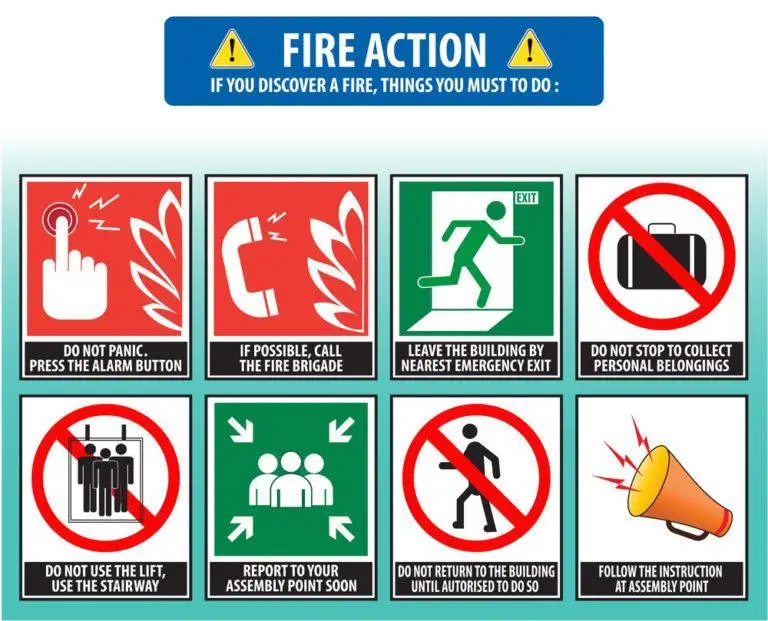
  • If a small fire is discovered, calmly tell others to leave the building. Do not cause panic. Only trained people should attempt to use fire extinguishers.
  • On hearing a smoke or fire alarm, leave immediately. Walk carefully, do not run, do not search for belongings, and follow exit signs.
  • Listen to Fire Marshals, move to the assembly point, stay away from the building, and do not re-enter until authorised.
Fire action and emergency safety signs
2

General Fire Safety Precautions

  • Keep the workplace clean and tidy.
  • Handle machinery and tools that may generate sparks or heat with care.
  • Do not smoke or use naked flames where flammable or explosive substances are stored.
  • Store flammable or explosive substances only in safe designated areas.
  • Do not repair electrical connections, machinery, or tools unless trained and competent.
  • Do not use electrical tools or equipment with damaged cables or plugs.
  • Remove combustible waste regularly and keep ignition sources away from combustible materials, liquids, and gases.
  • Dispose of waste in the correct designated areas.
  • Unplug electrical equipment that is not in use and at the end of the working day, except computer servers.
  • Report fire hazards as soon as they are identified, use surge protector outlets, and keep electrical equipment away from water.
3

Office Ergonomics

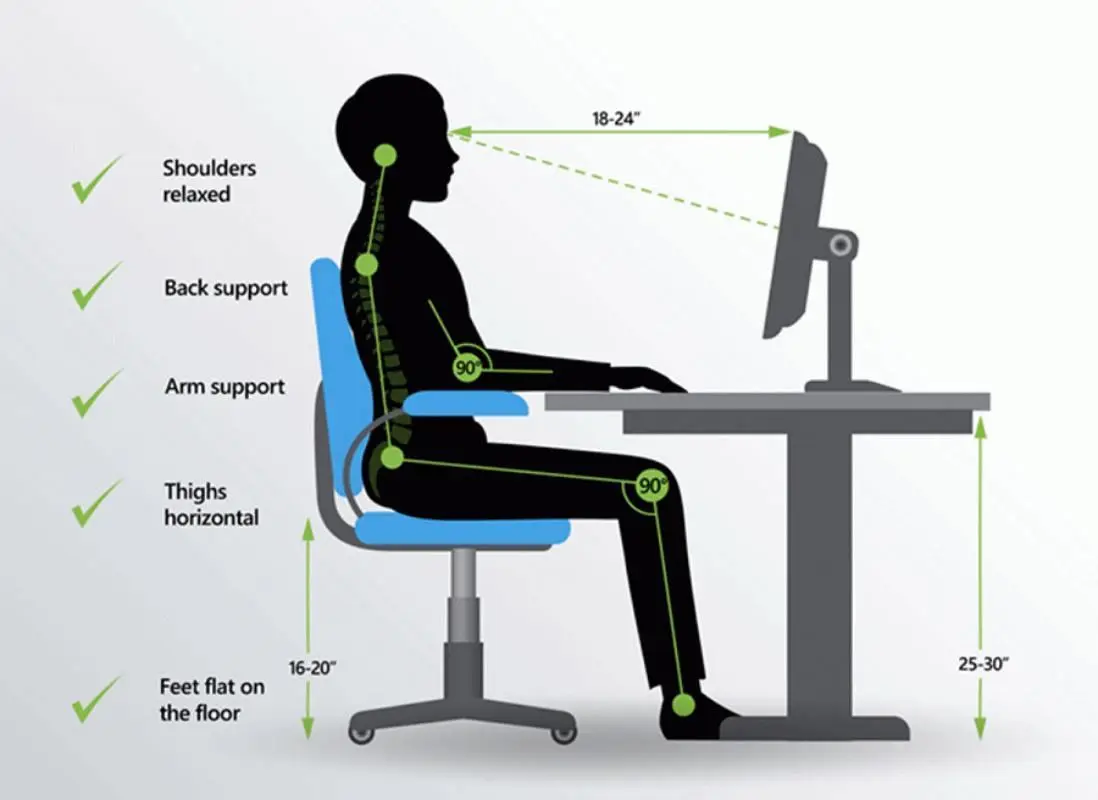
  • Set chair height so feet rest flat on the floor, thighs are parallel to the floor, and hips are level with knees.
  • Keep desk height comfortable so forearms are parallel to the floor and wrists remain neutral. Use a footrest if needed.
  • Position the computer monitor so the top of the screen is at, or slightly below, eye level.
  • Place the keyboard and mouse so elbows are at a 90-degree angle and wrists remain straight.
  • Use adjustable lighting to reduce glare and avoid placing screens in front of bright light sources.
  • Keep ambient noise to a minimum in office areas.
Correct sitting position when using computers and laptops
4

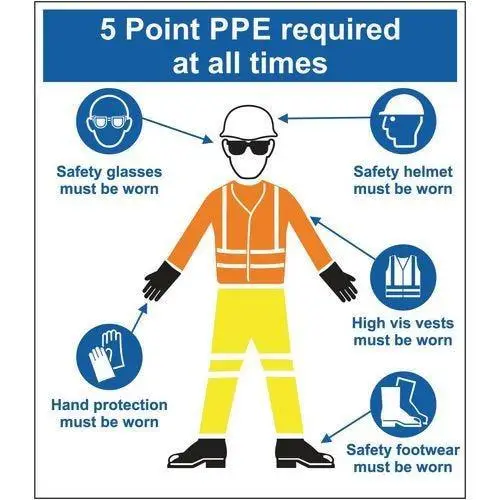
Personal Protective Equipment

  • Wear safety glasses, face shields, or goggles when there is a risk of eye or face injury.
  • Use eye protection for concrete breaking, welding, abrasive wheel use, and work with harmful chemicals.
  • Wear safety helmets where overhead, falling, flying, or electrical hazards exist.
  • Adjust helmet harnesses and chinstraps properly, inspect helmets routinely, and replace helmets after a heavy blow or electrical shock.
  • Wear high visibility clothing in construction areas, vehicle movement zones, low-light areas, and where machinery is operating.
  • Wear safety-toed shoes or boots with slip-resistant and puncture-resistant soles in high-risk areas.
  • Use the right gloves for the job, such as heavy-duty rubber gloves for concrete work or welding gloves for welding.
Required personal protective equipment on site
5

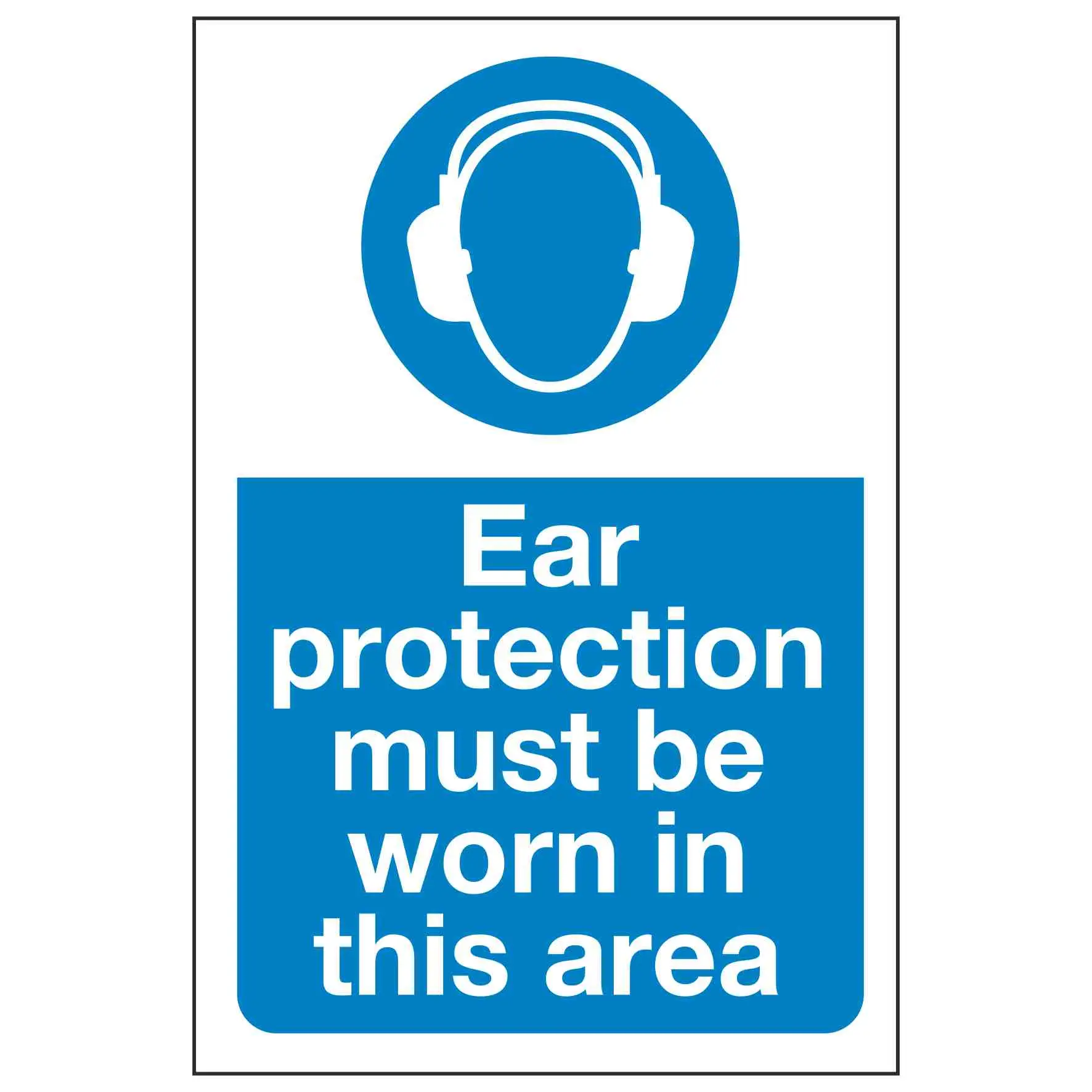
Ear Protection

  • Use earplugs or earmuffs in noisy environments.
  • Keep ear protection clean and do not modify it.
  • Inform management if provided ear protection is damaged.
Ear protection must be worn in this area sign
6

Vehicle Safety

  • Only employees authorised by management may operate company vehicles for company purposes.
  • Do not carry unauthorised passengers in company vehicles.
  • Keep vehicles in safe condition. Unsafe vehicles must be placed out of service and reported.
  • Only qualified company mechanics or approved service facilities may perform maintenance.
  • Operate vehicles responsibly, obey traffic laws, wear seat belts, and ensure all occupants wear seat belts.
  • Drivers must wear high visibility clothing, carry a hazard-warning triangle, and keep a working fire extinguisher in the vehicle.
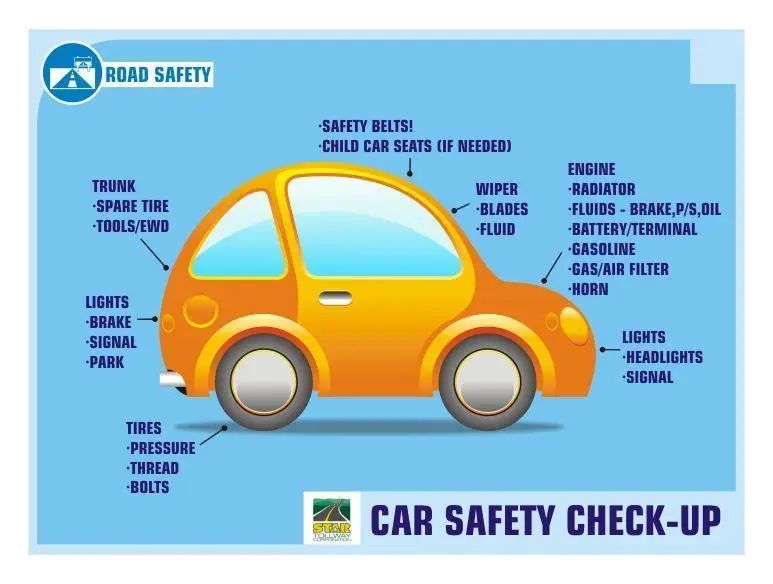
  • Conduct a pre-use inspection before first daily use, including horn, lights, wipers, brakes, tyres, steering, mirrors, oil, spare tyre, accessories, and warning lights.
  • Do not drive under the influence of drugs or alcohol, use a phone, read, write, eat, drink, speed, or leave loose items on the vehicle floor.
  • Maintain a safe distance, reverse slowly, watch for hazards, and park safely during hazardous weather.
  • Remain calm with other road users and report traffic law violations or law enforcement encounters.
Car safety check-up guide
7

Material Storage and Handling

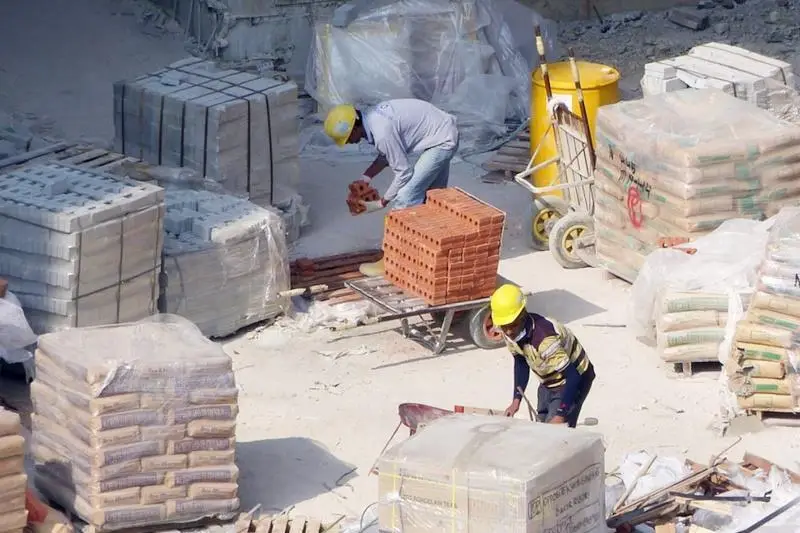
  • Stack and secure materials properly to prevent sliding, falling, or collapse.
  • Keep aisles, stairs, and passageways clear at all times.
  • Bend or pull protruding nails when stripping forms or uncrating materials.
  • Store pipe, conduit, and bar stock in racks or stack and block them to prevent movement.
  • Do not drop materials or scrap from elevated levels without trash chutes.
  • Do not allow stored materials to block building exits.
Correct storage of construction materials
8

First Aid and Medical Treatment

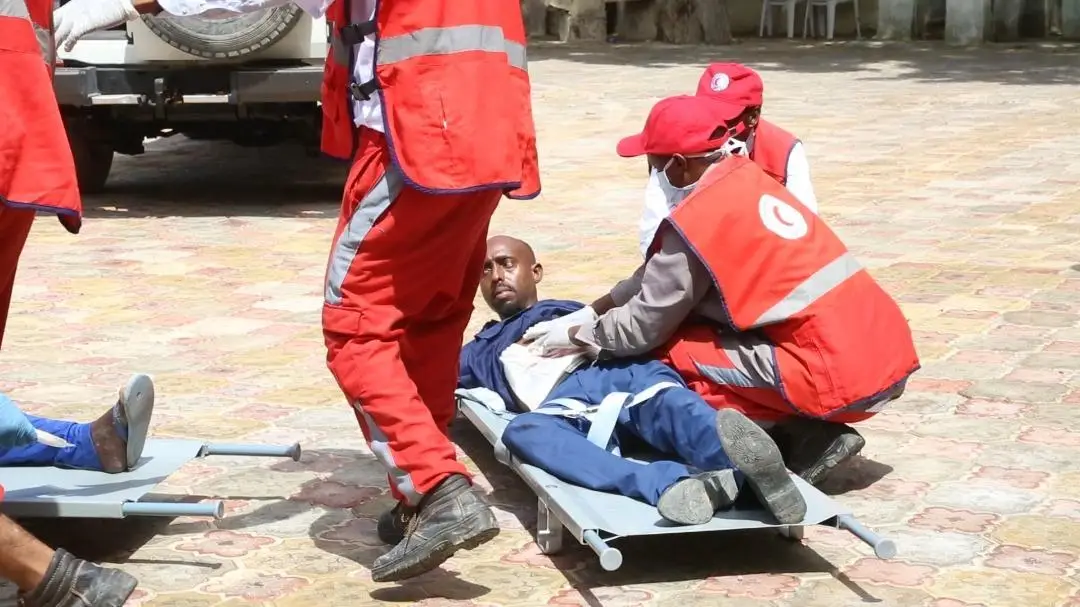
  • First aid supplies are provided at the workplace or jobsite, and qualified personnel are available to provide minor treatment and maintain records.
  • Know where first aiders are located on the jobsite.
  • Report all injuries immediately, no matter how minor, to management or the jobsite office.
  • Tell management about any pre-existing serious medical condition.
  • Except in cases of severe bleeding, non-designated employees should not administer first aid.
  • Raise the alarm immediately in the event of an accident.
First aid response at a worksite First aid sign
9

Tool Safety

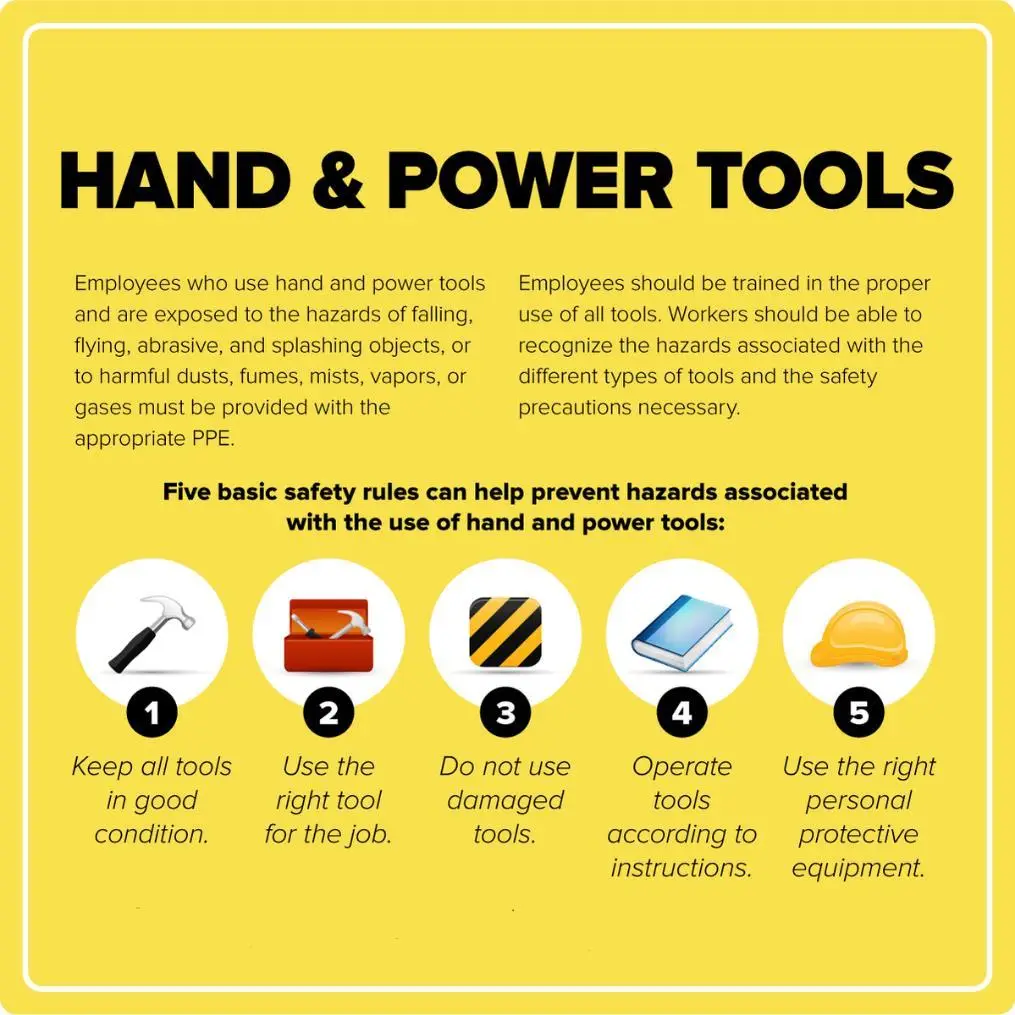
  • Tools make work easier, but improper use or poor maintenance can create serious hazards.
  • Employees who use tools must be trained to use, adjust, store, and maintain them properly.
  • Use only tools that are in safe working condition.
  • Inspect tools daily and remove damaged or defective tools from the jobsite immediately.
  • Report damaged or defective tools to management.
Hand and power tool safety guide
10

Working at Heights

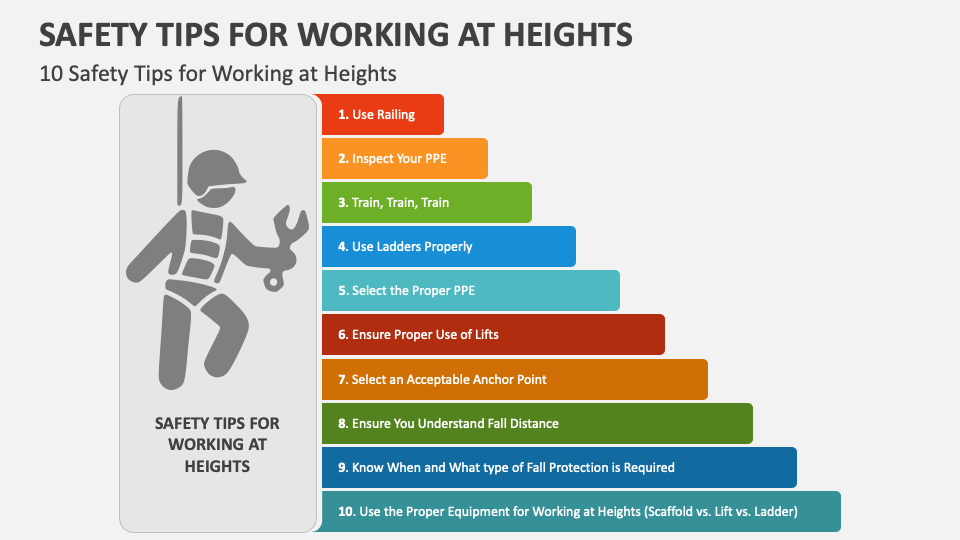
  • Use provided fall protection such as harnesses, guardrails, and safety nets.
  • Use ladders only when they are in good condition, stable, and placed on a firm surface.
  • Check scaffolding for proper assembly and secure footing before use.
  • Report problems with fall protection, ladders, or scaffolding immediately.
Safety tips for working at heights
11

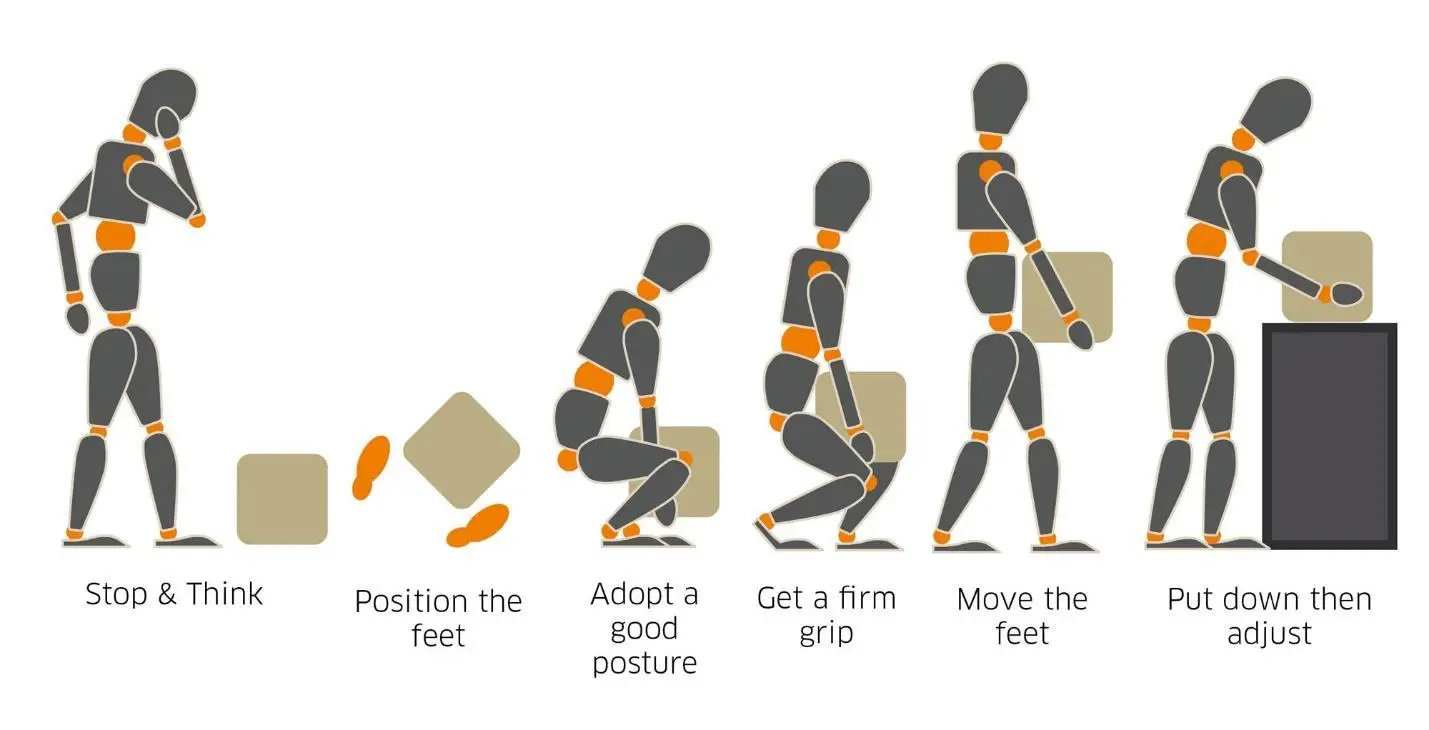
Manual Handling and Lifting

  • Use proper handling and lifting techniques to avoid back and other injuries.
  • Bend knees, keep the back straight, and lift with the legs.
  • Use team lifting for heavy or awkward loads.
  • Use mechanical aids such as trolleys, hoists, and forklifts where possible.
  • Do not use mechanical aids unless properly trained.
Safe manual handling and lifting technique
12

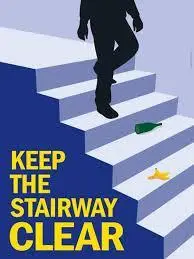
Stairs

  • Keep stairways clean and clear.
  • Remove hazardous projections such as protruding nails and large splinters from stairs, treads, and handrails.
  • Correct slippery stairway conditions before stairs are used.
  • Do not store materials on stairways used for general access between levels.
Keep the stairway clear safety notice
13

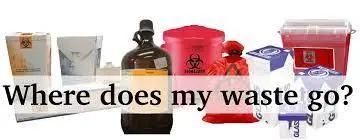
Environmental Safety

  • Respect and protect the environment at all times.
  • Dispose of waste materials in designated bins.
  • Follow procedures for managing chemical spills.
  • Where possible, take measures to minimise noise pollution.
Waste disposal and environmental safety

Conclusion

Adhering to these safety guidelines is essential for maintaining a safe and healthy work environment in the office and on construction sites. Safety is everyone's responsibility. Stay safe and report any concerns to management immediately.

Safety is everyone's responsibility